Complete Guide to Heavy Equipment Rental in Quebec (2026 Edition)
Quick Answer
Successful heavy equipment rental rests on three pillars: the right tonnage, transportation logistics, and operator qualifications. By confirming these elements before submitting a quote, you can choose heavy equipment that’s suited to the job site and your budget.
Renting heavy equipment in Quebec can help you avoid a significant investment, especially when the equipment is needed only for a specific job site, a seasonal period, or a one-time project. But for the rental to be cost-effective, it’s not enough to simply compare daily or hourly rates.
Several factors matter: choosing the right machine, factoring in transportation costs, reviewing the rental terms, understanding the responsibilities associated with the equipment, and determining whether an operator is needed.
In Quebec, searches for excavators, skid-steer loaders, backhoes, loaders, and heavy equipment are often driven by the same questions: how much will it cost, and which machine should be rented for the project? This guide helps you compare the main options, understand the prices listed in the Location Benoit catalog, and prepare a more precise request for a quote.
Why rent rather than buy your construction equipment?
Buying a backhoe, excavator, wheel loader, or other heavy equipment represents a significant investment. In addition to the purchase price, you must factor in preventive maintenance, storage, repairs, insurance, transportation, inspections, and depreciation over time.
Renting becomes a viable option when a project is one-time, seasonal, or difficult to predict. It allows you to use the right machine only when needed, without tying up capital in equipment that might sit idle for part of the year.
Renting also offers greater flexibility. A skid steer loader may be suitable for tight spaces, while a heavier excavator may be preferable for deeper excavation. A wheel loader may be the better choice for moving materials, loading, handling, or snow removal.
Purchasing may make sense for a business that uses the same equipment almost every day. But for many contractors, municipalities, local businesses, or site managers, renting allows them to tailor the machine to the project, the season, and the budget.
Renting does not, however, eliminate all responsibilities. The customer must verify the terms of use, transportation, insurance, fuel, accessories, machine return, and site-related obligations.
The Equipment Catalog: How to Choose Based on Your Project?
The right heavy equipment isn’t always the biggest or the cheapest. It’s the one that matches the job at hand, site access, excavation depth, the volume of materials to be moved, and the level of precision required.
A residential drainage project, a trench, a commercial excavation, a snow removal job, a material handling operation, or a need to transport materials do not all require the same equipment. Before renting, it is therefore important to clarify the type of work and the site’s constraints.
Mechanical Excavators: From 1.7-ton mini-excavators to 20-ton models.
In Quebec, the term “mechanical shovel” is widely used to refer to excavation equipment. The term “excavator” is often more technical, but both terms are sometimes used to describe similar machines.
The mini-excavator is a more compact version. It is often suitable for restricted access areas, residential yards, small spaces, trenches, and jobs requiring precision. A heavier excavator generally offers more power, reach, and capacity for more demanding jobs.
The choice depends mainly on several factors:
- the machine’s weight;
- digging depth;
- reach;
- the access width;
- power;
- soil type;
- the volume of material to be moved;
- required precision;
- the expected duration of the project.
A skid steer loader may be suitable for residential work, drainage, trenching, or work around a building. A heavier excavator is better suited when the job requires greater reach, greater depth, or higher productivity.
Avoid choosing a machine solely because it seems less expensive. A machine that is too small can prolong the project, increase operating time, and incur additional costs. Conversely, a machine that is too heavy can complicate access, transport, and maneuvering.
Wheel Loaders: Versatility and Power.
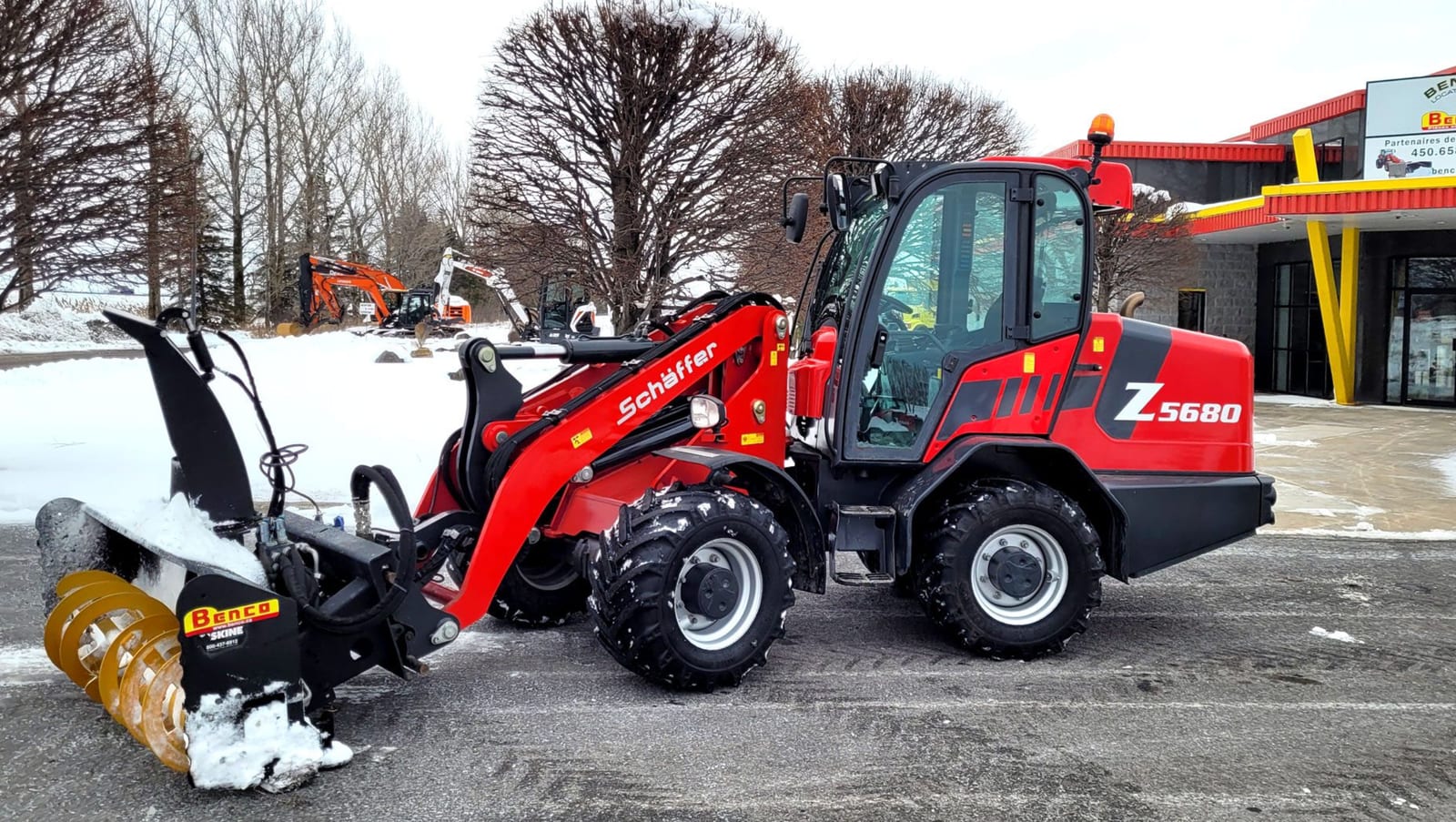
A wheel loader does not serve the same purpose as an excavator. It is primarily used to move, load, or handle materials. It can be very useful for snow removal, loading, and moving soil, gravel, or other materials on a job site.
In certain projects, the loader complements a backhoe very well. The backhoe is used for digging or excavating, while the wheel loader is used to move, load, or distribute materials.
For a job site that requires loading, material handling, or snow removal, it may be more efficient to rent a loader than an excavator. To learn more about this topic, check out the Benco guide to wheel loaders in Quebec.
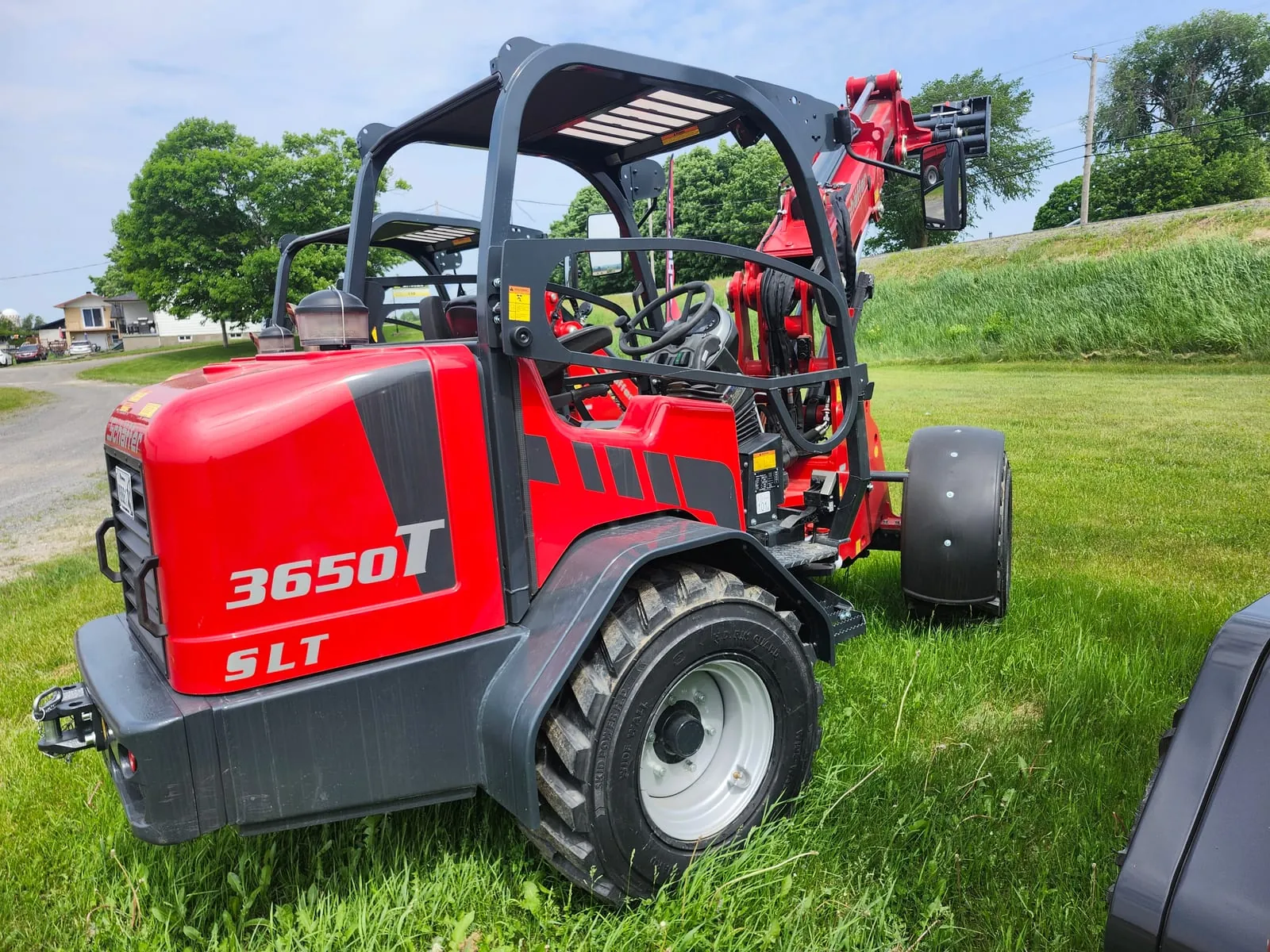
Forklifts and lifting equipment.
Depending on the job site, the best solution isn’t always a backhoe or an excavator. A forklift may be more suitable for lifting, handling, or moving loads on a site.
Lifting equipment serves a different purpose: it is not used for digging, but for moving loads, organizing a warehouse, supplying a work area, or supporting a material handling operation.
The right choice therefore depends on the actual objective. If the primary need is to dig, a backhoe or excavator will be more suitable. For lifting or moving loads, a forklift or lifting equipment may be more appropriate.
A sidewalk snowplow, such as a Benco-Schaffer 3650MAX when this type of equipment is required, is better suited to seasonal, municipal, or commercial needs related to snow removal, access maintenance, and narrower spaces.
Essential attachments: Buckets, grapples, and hammers.
The attachment can significantly impact a job site’s efficiency. The same machine can be used differently depending on the bucket, hydraulic thumb, blade, tracks, or hammer installed.
Before renting, you must specify the work to be done. A digging bucket, a finishing bucket, a hydraulic thumb, a snow blade, or a rock drill (BRH) do not serve the same purpose.
Rubber or steel tracks can also influence the decision. Rubber tracks are often preferred to minimize marks on certain surfaces, while steel tracks may be better suited for more demanding environments. The choice should be based on the terrain, equipment, and job site conditions.
You should also check whether accessories are included, optional, or billed separately. The right accessory can improve productivity, but a poor choice can slow down work or create unnecessary costs.
Rental with Operator vs. Without Operator: The Decision Guide
Renting with an operator and renting without an operator address two different situations. The right option depends on the on-site experience available, the complexity of the job site, the level of risk, the budget, and safety requirements.
Renting without an operator offers more autonomy, but requires someone competent to operate the machine. Renting with an operator may be more suitable when the job site is technically demanding or when efficiency is a priority.
Renting without an operator: for which projects?
Renting without an operator may be suitable if you already have a qualified person to operate the equipment. It can be a good option for a contractor who is familiar with the machine, for a simple job site, or for a team that wants to maintain full control over the schedule.
However, this option requires thorough preparation. This means knowing the machine’s limitations, following operating instructions, verifying site access, and understanding the responsibilities outlined in the contract.
Before renting without an operator, you should ask yourself a few questions:
- Who will be operating the machine?
- Does this person have the necessary experience?
- Does the job site involve any specific risks?
- Is access easy?
- Does the work require a high degree of precision?
- Are the insurance terms clear?
- Is the customer responsible for paying for gasoline or diesel?
- Are the required accessories available and compatible?
Renting with an operator: for which projects?
Renting with an operator may be preferable when the job site requires precise, fast, or safe execution. This is often the case for work in confined spaces, difficult terrain, urgent projects, or job sites where the team does not have an experienced operator.
An operator familiar with the equipment can help reduce errors, better manage site constraints, and use the machine more efficiently. This doesn’t mean this option is always necessary, but it can become more cost-effective when the risk of error or delay is high.
On a technical job site, the operator’s support can also speed up certain maneuvers and facilitate the safe use of the machine. The actual benefit, however, depends on the type of work, access to the job site, and site conditions.
Legal Obligations, CCQ, and Safety in Quebec
Renting heavy equipment does not eliminate responsibilities. Private property, a commercial site, and a regulated construction site must not be treated as identical situations.
For a regulated construction site in Quebec, qualification requirements may apply. It is therefore necessary to verify the context, the type of work, the role of the person operating the equipment, and the project owner’s requirements, particularly with the Commission de la construction du Québec (CCQ) when the site is regulated.
This section does not replace legal advice. If in doubt, confirm the requirements with the relevant authorities, the project manager, or the site’s health and safety officers.
Safety must also be a factor in the rental decision. Before starting work, you must check:
- traffic areas;
- the presence of pedestrians;
- reversing maneuvers;
- visibility;
- communication among people on the job site;
- risks associated with the terrain;
- the project manager’s instructions;
- required protective equipment.
A machine that is unsuitable, too large, too small, or operated without the necessary experience can lead to delays, risks, and additional costs.
What the quote must confirm
To choose between rental with or without an operator, the bid must confirm several items:
- the recommended model;
- the applicable rate;
- the expected duration;
- availability;
- transportation conditions;
- the necessary accessories;
- the customer’s responsibilities;
- insurance terms;
- site-specific details;
- the amount of gasoline or diesel to be provided;
- the return conditions for the machine.
This step prevents you from simply comparing hourly or daily rates. It helps you understand the total cost and choose the most logical option for the project.
Do you already have the job site details?
Request a detailed quoteWhat is the cost of heavy equipment rental in Quebec?
The cost of renting heavy equipment in Quebec varies depending on several factors: the type of equipment, the model, the weight, the rental duration, whether or not an operator is included, accessories, transportation, insurance, and site conditions.
A small excavator does not meet the same needs as a heavier excavator. Similarly, a wheel loader is not rented for the same tasks as a hydraulic excavator. That is why it is best to compare prices by equipment category rather than looking for a single rate.
The amounts below are examples of rates listed in the Benco and Location Benoit catalog at the time of the search. They must always be confirmed via a quote, as availability, duration, transportation, accessories, and site conditions can affect the final cost.
Comparison table of rates for key categories
| Equipment | Rental Type | Listed Price | To be confirmed before rental |
|---|---|---|---|
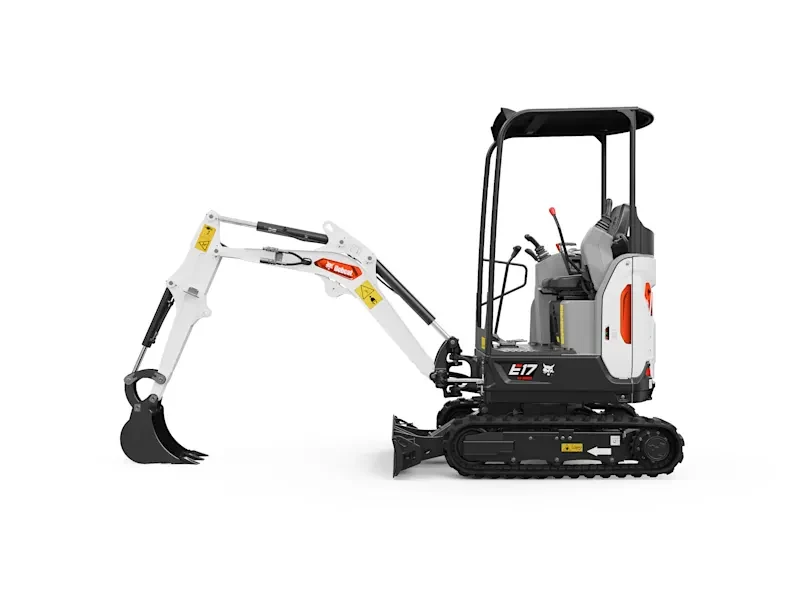
| Bobcat E17 | Excavator without operator | $405/day | Availability, duration, transportation |
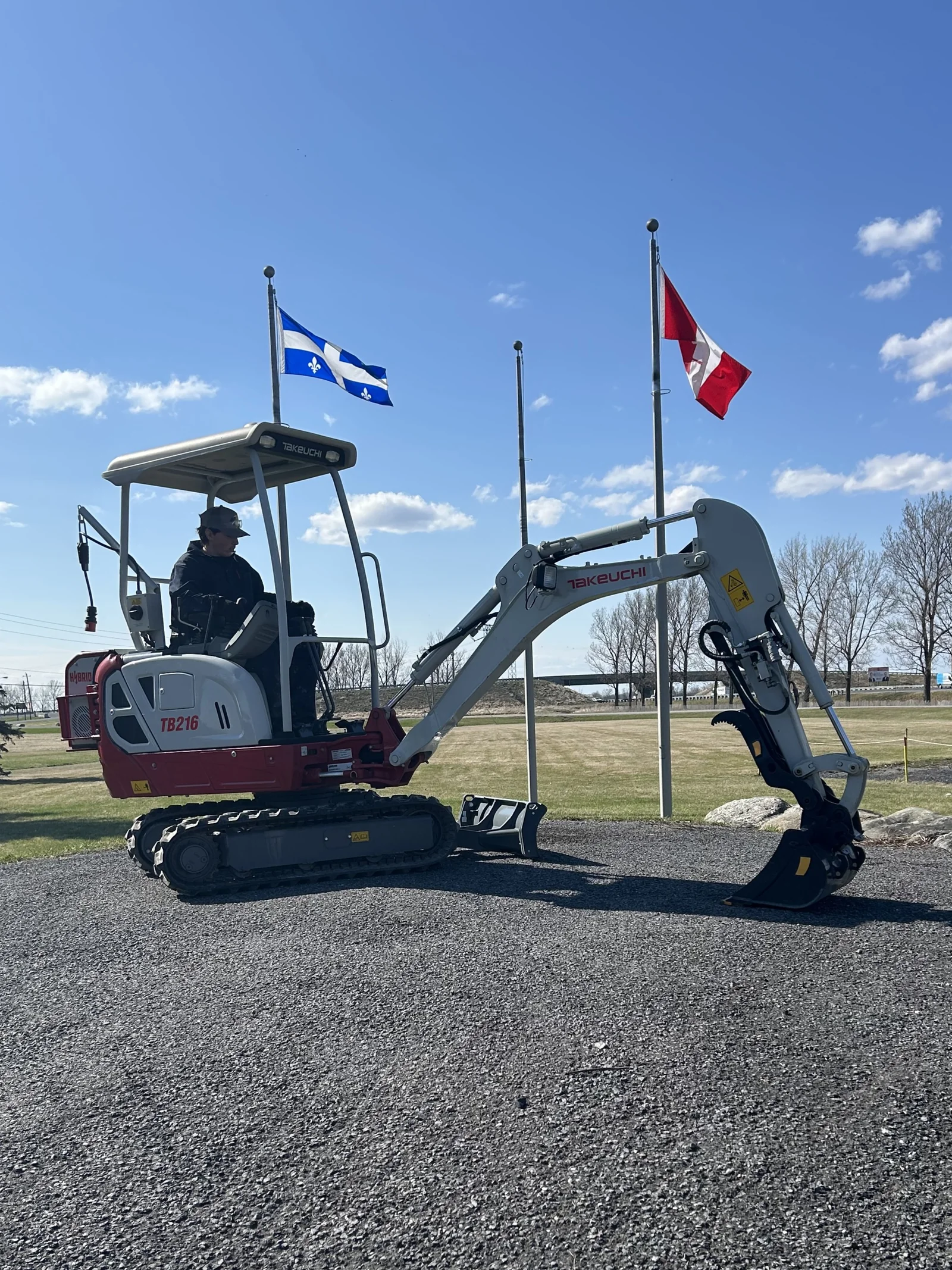
| Takeuchi TB216H | Unmanned excavator | $462/day | Availability, duration, transportation |
| Hitachi ZX210 | Unmanned excavator | $1,050/day | Availability, job site, transportation |
| Hitachi ZX130-7 | Unmanned excavator | $695/day | Availability, job site, transportation |
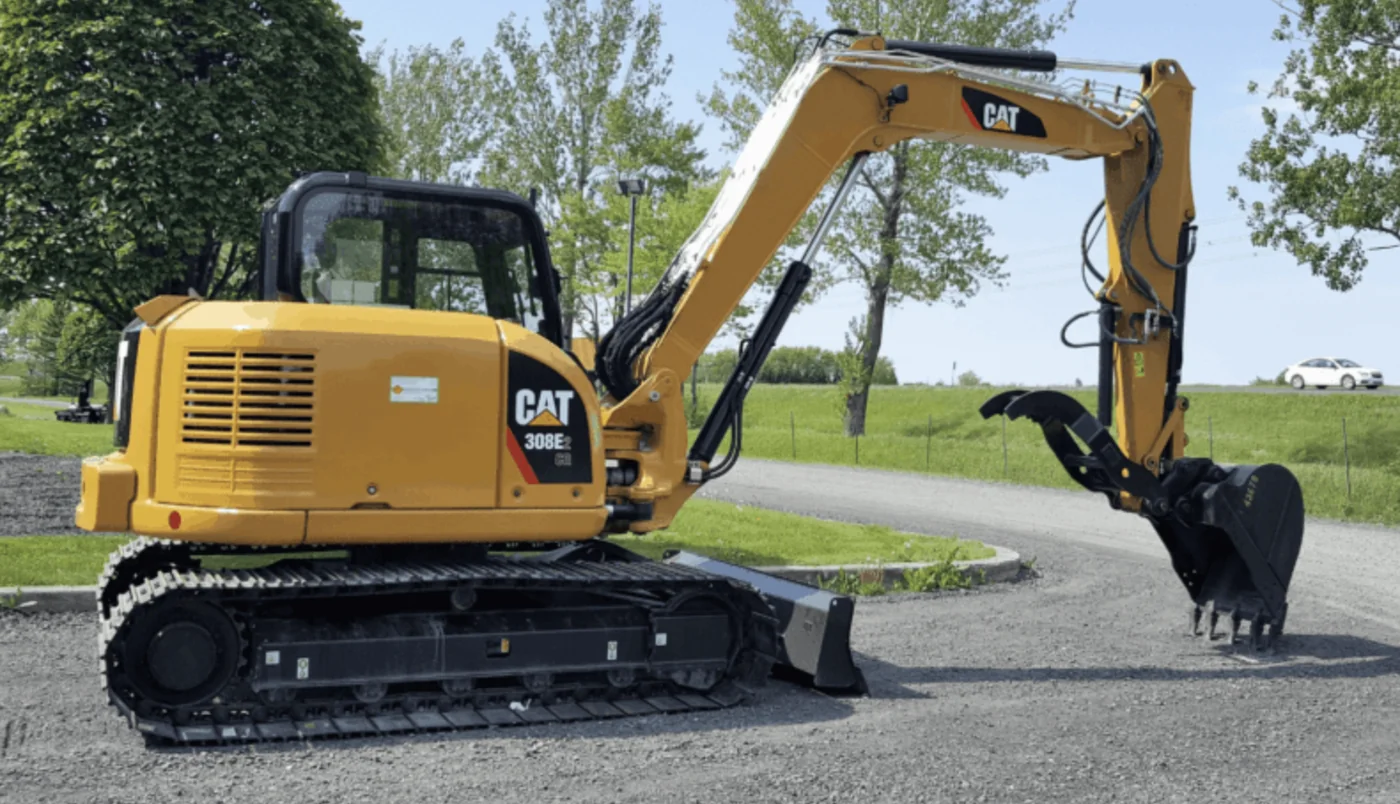
| Caterpillar 308E | Unmanned excavator | $610/day | Availability, duration, accessories |
| Bobcat E50 | Unmanned excavator | $520/day | Availability, duration, accessories |
Rates listed in the Benco and Location Benoit catalog at the time of the search; subject to confirmation based on availability, duration, transportation, accessories, and job site conditions.
These prices provide a useful reference for estimating the budget for a rental without an operator. However, they do not automatically represent the total cost of the project. Transportation, insurance, actual duration, accessories, and site constraints must also be taken into account.
Rates with operator: examples shown
| Equipment | Rental type | Listed price | To be confirmed before rental |
|---|---|---|---|
| Bobcat E17 | Excavator with operator | $127/hr | Site conditions |
| Takeuchi TB216H | Excavator with operator | $138/hr | Site conditions |
| Schaffer 9640T | Loader with operator | $179/hr | Type of work, availability |
| Schaffer 6680Z | Loader with operator | $148/hr | Type of work, availability |
| Schaffer 5680Z | Loader with operator | $143/hr | Type of work, availability |
Rates listed in the Benco and Location Benoit catalog at the time of the search; subject to confirmation based on availability, duration, transportation, accessories, and job site conditions.
Renting with an operator should not be evaluated solely based on the hourly rate. It can also reduce errors, speed up certain maneuvers, and simplify work on technically challenging sites. The best choice therefore depends on the level of on-site experience, the type of soil, access conditions, and the required precision.
Want to compare the available models?
View the complete rental catalogHidden costs: fuel, cleaning, transportation, and insurance
The listed price of a machine does not always cover the full actual cost of the project. Before confirming a rental, you should verify the following:
- transportation of the machine to the job site;
- return of the equipment;
- the actual rental duration;
- fuel or diesel costs;
- the fuel level at the start and end of the rental;
- requested accessories;
- insurance terms;
- liability in the event of damage;
- routine maintenance or inspections requested during the rental;
- access to the job site;
- schedule constraints;
- possible cleaning or special usage fees.
You should also clearly ask what is included and what is not. For example, diesel fuel, cleaning, certain accessories, transportation, or specific protective equipment can affect the final bill depending on the rental terms.
The safest approach is to request a detailed quote. This allows you to compare the machine price, transportation costs, whether the rental includes an operator, and the rental terms before making a decision.
Logistics and Transportation: Serving the Montérégie, the South Shore, and Greater Montreal
Logistics is a key part of heavy equipment rental. A backhoe, excavator, or loader isn’t transported like a small tool. Weight, dimensions, site access, and distance directly impact the logistics and final cost.
Even when the rental price is clear, transportation can affect the total budget. It’s therefore important to address this from the moment you request a quote.
Factors Affecting Transportation Costs
Transportation costs can depend on several factors:
- the distance between the departure point and the job site;
- the weight of the machine;
- the dimensions of the equipment;
- the type of trailer or transport required;
- the accessibility of the job site;
- delivery or return times;
- loading and unloading constraints;
- the region served.
On the South Shore, in Montérégie, or in the Montreal area, access to the job site can sometimes be a major factor. A narrow street, a difficult entrance, unstable ground, or limited maneuvering space can influence the choice of equipment and transportation planning.
Local Focus: Richelieu, Chambly, Saint-Jean, and Longueuil
Location often influences the total cost of a rental. For a job site located in Richelieu, Chambly, Saint-Jean-sur-Richelieu, Longueuil, on the South Shore, or in Montérégie, transportation, access, distance, and terrain conditions all come into play.
Two job sites may rent the same machine but end up with different total costs, as distance, transportation, access, and site constraints are not always the same.
It is therefore best to specify the city or region from the outset. This allows us to better plan for transportation and confirm whether the recommended machine is actually suitable for the terrain.
A request that simply states “I need a backhoe” is too vague. Conversely, specifying the city, the type of work, access, and duration allows you to receive a response more quickly.
Information to Prepare Before Requesting a Quote
A clear quote request leads to a more helpful response. Before contacting Benco, ideally prepare the following information:
- the type of work;
- the address or region of the job site;
- the estimated duration;
- access to the site;
- whether an operator is required;
- any special requirements;
- the desired date;
- the approximate budget, if available;
- necessary accessories;
- dimensions or access restrictions, if known.
The more specific the information, the easier it is to recommend the right machine and avoid an unsuitable rental.
Ready to confirm the right equipment?
Request a quote onlineFAQ: Our experts’ answers to your frequently asked questions
What is the rental price for an excavator in Quebec?
The price depends on the model, rental duration, whether an operator is included, transportation, accessories, and site conditions. For example, the Location Benoit catalog lists excavators without an operator starting at daily rates and excavators with an operator starting at hourly rates. The exact rate must be confirmed via a quote.
What is the hourly rate for a heavy equipment operator?
The hourly rate depends on the equipment, the type of work, the duration, the region, and site conditions. Some Location Benoit models with an operator are listed by the hour in the catalog, but the final amount must be confirmed based on the project.
Do I need a special permit to operate a rented excavator?
It depends on the context. A regulated construction site may have different requirements than a private project. For construction sites in Quebec, you must verify the applicable requirements with the relevant authorities, the CCQ, the CNESST, or the project manager.
What is the difference between a backhoe and an excavator?
In Quebec, “backhoe” is a common term for excavation equipment. “Excavator” is often a more technical term. The choice depends mainly on the size, power, digging depth, reach, and type of work.
How do you calculate transportation costs for heavy machinery?
Transportation costs may depend on distance, the machine’s weight, dimensions, type of trailer, site access, schedule, and delivery conditions. The best way to estimate them is to provide the job site address and access constraints when requesting a quote.
Can I rent an excavator for just one day?
Yes, certain equipment can be rented by the day depending on conditions and availability. However, the rate may vary depending on the model, transportation, accessories, the time of year, and whether the package includes an operator. A quote is still required to confirm the exact price. To learn more about choosing an excavator, also check out our guide to excavator rental in Quebec.
Conclusion and Request for a Custom Quote
Renting heavy equipment in Quebec can be a flexible solution for completing a project without purchasing a machine outright. But to avoid mistakes, you need to compare more than just the price: choose the right equipment, verify transportation, confirm the rental terms, and decide whether an operator is needed.
Whether you’re looking for a hydraulic excavator, a skid steer loader, a backhoe, a loader, a forklift, a sidewalk snow blower, or a solution with an operator, the most important thing is to start with the actual job site: type of work, access, duration, region, and constraints.
Don’t just rent a machine—rent a solution tailored to your job site.
Call Benco at 450-658-1802 or request a quote online to confirm the model, rate, and rental terms.